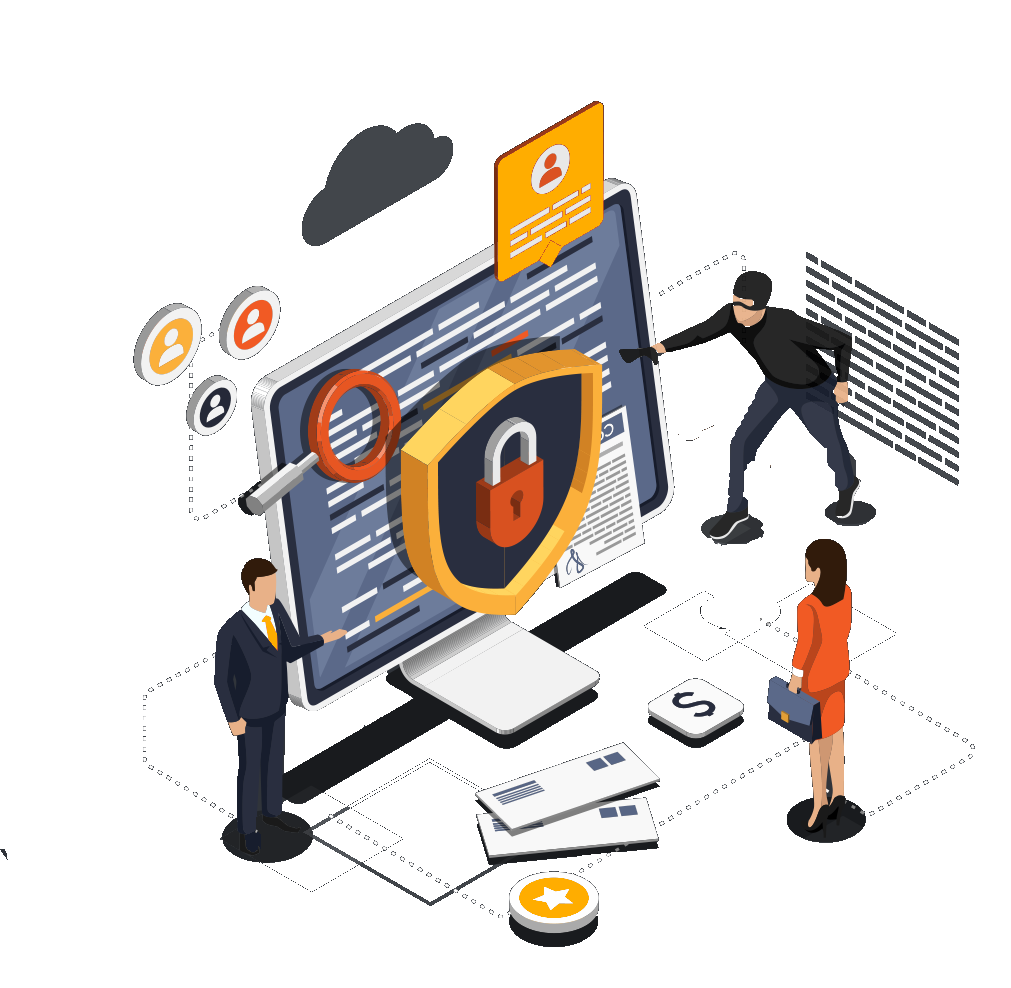







Security Tests

PENETRATION TESTING

How penetration testing to keep your systems secure

In an increasingly uncertain world that is relying more on communication and information, organisations need to be more careful than ever that their cybersecurity is up to the task of protecting their assets and also their customers, suppliers and the general public.

Apstorm offers a comprehensive range of cyber security services that test every aspect of an organisations security and offers remediation advice for their management team.

Vulnerability scanning solutions allow organisations to determine if they have any security risks in their infrastructure setup. For instance, this may be a configuration error in a certain application or could be a known vulnerability in an unpatched device. Scans can be conducted regularly and after changes are made, to reduce vulnerabilities, they are generally none intrusive.

Penetration testing can be performed either external from outside the organisation’s network or inside the network. Once the vulnerability has been identified the penetration tester tries to exploit that vulnerability to see what the risk may be. It is this exploitation by a person that differentiates Penetration tests from vulnerability scans. Many auditors require a penetration test for their assessment.


What Does Penetration Testing Do

Identify Critical Vulnerably Before Attackers

A penetration test identifies security weaknesses in networks, applications, endpoints, servers, and cloud services. This helps you fix issues before they are exploited, focusing on the most serious vulnerabilities.

Test Your Defences and Response

Penetration tests evaluate your security controls and monitoring systems. They show if your systems fail to detect attacks, helping you improve before a real threat occurs.

Lower Cyber Risk and Avoid Costs

Proactively testing your defences reduces the chance of a serious incident. Addressing vulnerabilities early is cheaper than managing a data breach or ransomware attack, saving you money and reputation

Meet Compliance Requirements

Many standards, such as PCI DSS and ISO 27001, require regular penetration testing. These tests provide proof of due diligence for compliance audits and customer security questionnaires.

What Does Penetration Testing Do

Identify Critical Vulnerability Before Attackers

A penetration test identifies security weaknesses in networks, applications, endpoints, servers, and cloud services. This helps you fix issues before they are exploited, focusing on the most serious vulnerabilities.

Test Your Defences and Response 

Penetration tests evaluate your security controls and monitoring systems. They show if your systems fail to detect attacks, helping you improve before a real threat occurs.

Lower Cyber Risk and Avoid Costs

Proactively testing your defences reduces the chance of a serious incident. Addressing vulnerabilities early is cheaper than managing a data breach or ransomware attack, saving you money and reputation

Meet Compliance Requirements

Many standards, such as PCI DSS and ISO 27001, require regular penetration testing. These tests provide proof of due diligence for compliance audits and customer security questionnaires.

Types of Penetration Testing

Network Penetration Testing 

Identifies vulnerabilities in your IT infrastructure, servers, and network devices. External tests simulate attacks from outside your network, while internal tests mimic insider threats or breaching attackers seeking unauthorised access.

Cloud Security Assessments: 

Reviews cloud environments (AWS, Azure, Google Cloud) for vulnerabilities, examining IAM policies, storage access, and container configurations to identify misconfigurations and improve security.

Web & Mobile App Testing:

Expert testing simulates real-world attacks on your web and mobile applications. We assess portals, e-commerce sites, and mobile apps for vulnerabilities like SQL injection, XSS, and OWASP Top 10 risks using automated tools and manual testing.

Wireless Network Penetration Testing:

Thorough assessments of Wi-Fi, Bluetooth, and wireless networks. We evaluate encryption strength, authentication mechanisms, and simulate attack scenarios to identify potential vulnerabilities. 

IoT Security & Embedded Devices:

Evaluates connected hardware, including medical devices, vehicles, and industrial systems. Includes firmware analysis and testing of client-server interactions to identify vulnerabilities. 

API and Software Application Testing: 

Comprehensive testing focusing on authentication, authorization, rate limiting, and input validation to identify vulnerabilities and strengthen your software’s defences against threats. 

Why use Apstorm for your penetration testing

AI‑powered threat detection takes your SOC to the next level with agentic automation and workflows that cut false positives, deliver fixes, and reduce MTTR to around 15 minutes. Options include in‑house team ownership, fully managed through Apstorm, or a hybrid model that lets your analysts switch off evenings and weekends.

How the Penetration Testing Process Works

1.Initial Scoping

We begin with a careful scoping exercise to define test parameters with your decision makers. This identifies which systems, networks, applications, or facilities are in scope and what testing methods are permitted. Clear scoping ensures critical assets are covered while avoiding unintended impact on business operations. We establish rules of engagement, timelines, and goals – for example, in web application tests, we define specific domains or features as in scope while excluding destructive techniques like Denial of Service attacks.

2. Reconnaissance & Planning

Our testers gather Open-Source Intelligence (OSINT) and information about your target environment before launching active exploits. This reconnaissance phase includes mapping your network infrastructure, identifying public-facing assets like websites and firewall IP addresses, and understanding your digital footprint from an attacker’s perspective.

3. Vulnerability Discovery

We systematically identify security weaknesses using automated vulnerability scans and specialist tools to find known issues. Our testers use leading scanning tools to quickly identify potential flaws such as missing patches, misconfigurations, or unsafe software versions. We analyze attack paths to understand how vulnerabilities could be combined and evaluate the minimum risk they pose, including debriefs with your technical staff to validate findings

4. Exploitation & Attack Simulation

This stage demonstrates penetration testing’s true value beyond ordinary vulnerability scans. With your approval, our ethical hackers attempt to exploit identified vulnerabilities to gain unauthorised access. We might escalate privileges, pivot into internal networks, or chain multiple bugs into sophisticated attacks – exactly what malicious hackers would do. This phase is conducted carefully with safety checks to prevent damage while revealing the real-world impact of each flaw. excluding destructive techniques like Denial of Service attacks.

5. Post-Exploitation & Analysis

When we successfully breach systems, we perform controlled post-exploitation activities including gathering proof of access, mapping network traversal capabilities, and securely cleaning up any artifacts created during testing. This demonstrates the full extent of potential damage while maintaining the integrity of your systems

6. Reporting & Remediation Guidance

We compile comprehensive reports detailing findings, impacts, and recommended fixes. Reports prioritise issues by risk level and provide clear remediation steps, including executive summaries for management and technical sections for engineers. After delivery, we conduct review meetings with stakeholders and offer free re-testing of critical fixes to ensure lasting security improvements rather than just documentation.

Certified Testing

Penetration Testing FAQs

For More Information Get in Touch

Item #1

Penetration Testing FAQs

Item #1

Other Similar Services

For more information on vulnerability scanning and penetration testing