
Security Tests
Vulnerability Scanning
How penetration testing to keep your systems secure
Enterprise Vulnerability Management: Strategic Security for Modern Threats
In today’s rapidly evolving threat landscape, vulnerability management is no longer a technical afterthought—it’s a strategic imperative. CISOs, cybersecurity directors, and GRC leaders need solutions that provide comprehensive visibility, intelligent prioritisation, and measurable risk reduction across increasingly complex hybrid environments.
Our enterprise vulnerability management solutions help you transform overwhelming security data into actionable intelligence that drives business resilience.
What Does Vulnerability Scanning Do
Complete Attack Surface Visibility
Monitor your entire digital estate, including on-premises infrastructure, cloud workloads, endpoints, OT/IoT devices, web applications, and shadow IT. Eliminate blind spots that attackers exploit with unified, continuous asset discovery.
Continuous Monitoring & Detection
Implement scheduled and real-time scanning that adapts to your environment’s change rate. Detect new services, configuration drift, and emerging vulnerabilities instantly, enabling proactive rather than reactive security management.

Intelligent Risk Prioritisation
Move beyond basic CVSS scoring with AI-driven threat intelligence that considers real-world exploit activity, attacker behaviour patterns, and business context. Focus remediation efforts on vulnerabilities that pose a genuine risk to your organisation.

Compliance Ready Reporting
Generate compliance-ready documentation and executive dashboards that clearly communicate risk posture, remediation progress, and control effectiveness to boards, auditors, and regulatory bodies.
How Vulnerability Scanning Helps Secure Your Organisation
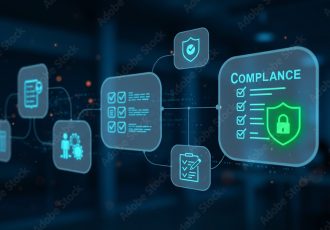
Regulatory Compliance Made Systematic
Modern vulnerability management platforms are designed to support complex regulatory requirements across multiple frameworks:
Multi-Framework Compliance:
Address requirements for ISO 27001, PCI DSS, HIPAA, SOC 2, DORA, NIS2, and NIST frameworks through automated, regular assessments with comprehensive documentation and audit trails.
Audit-Ready Evidence:
Generate detailed reports that document vulnerability discovery, risk assessment, remediation status, and control testing—providing auditors with the evidence they need for efficient compliance reviews.
Continuous Control Monitoring:
Maintain compliance posture through automated scanning schedules that verify remediation effectiveness and detect new exposures before they impact compliance status.
Risk-Based Compliance Prioritisation:
Apply business context and regulatory weighting to vulnerability scoring, ensuring compliance-critical issues receive appropriate attention and resources.
Asset Inventory Management:
Maintain comprehensive, real-time asset inventories across hybrid environments, addressing a fundamental compliance requirement while enabling accurate risk assessment.
Due Diligence Documentation:
Create auditable evidence of your vulnerability management programme’s maturity, demonstrating proactive risk management to regulators, customers, and board members.
How Does Apstorm Help You Implement Vulnerability Scanning
1. Assessment & Strategy Development
We begin by understanding your current vulnerability management maturity, regulatory requirements, and business objectives to design an optimal solution architecture.
2. Platform Selection & Configuration
Select and configure the most appropriate enterprise platform, based on your environment complexity, integration requirements, and operational preferences.
3. Integration & Automation
Connect vulnerability management with existing security tools and business processes to create automated workflows that improve efficiency and reduce manual overhead
4. Team Enablement & Training
Ensure your security team can leverage platform capabilities effectively through comprehensive training and ongoing support from certified consultants.
5. Continuous Optimisation
Regular programme reviews ensure your vulnerability management evolves with your business, maintaining effectiveness as your environment and threat landscape change.
Apstorm's Managed Vulnerability Scanning Service
Expert Oversight
As cyber threats evolve rapidly, many organisations turn to Managed Security Service Providers (MSSPs) to gain expert oversight of their vulnerability management programs without adding internal complexity or overhead. Our managed vulnerability scanning service delivers continuous, comprehensive visibility and prioritised risk reduction tailored to your environment and compliance needs.
24/7 Proactive Threat Detection
Our security experts continuously monitor your attack surface, using advanced scanning platforms like Tenable, Rapid7, and Intruder to identify vulnerabilities and configuration gaps before they can be exploited
Expert Risk Prioritisation and Analysis
We don’t just scan, we analyse vulnerability data through risk-based approaches enhanced by AI and real-world threat intelligence, ensuring your team focuses remediation efforts on the highest-priority exposures.
Remediation Guidance and Support
Our security analysts provide actionable recommendations and ongoing support for patching and mitigation, reducing your mean time to remediation and strengthening your security posture.
Cost-Effective Security Expertise
Outsource the complexity of vulnerability management to seasoned professionals, reducing the need for costly in-house resources while maintaining continuous protection and risk visibility.
For More Information Get in Touch
Vulnerability Scanning FAQs
Technical Approach
What's the difference between vulnerability scanning and penetration testing?
Vulnerability scanning provides continuous, automated discovery of known security weaknesses across your entire attack surface. Penetration testing involves skilled security professionals manually exploiting vulnerabilities to demonstrate real-world attack scenarios. Think of scanning as your security radar system running 24/7, whilst pen testing is your annual deep-dive investigation. Most effective security programmes combine both approaches.
Authenticated vs unauthenticated scans—what's the difference?
Authenticated scans use read-only credentials to examine systems from the inside, providing detailed visibility into patch levels, configuration weaknesses, and internal vulnerabilities with minimal false positives. Unauthenticated scans assess what external attackers can see and exploit without credentials. We recommend running both: authenticated scans for comprehensive internal assessment and unauthenticated scans to understand your external attack surface.
Do you scan cloud and containers?
Absolutely. Our cloud security assessment covers:
- Cloud Security Posture Management (CSPM): Misconfigured storage buckets, overly permissive security groups, and policy violations
- Cloud Infrastructure Entitlement Management (CIEM): Excessive IAM permissions and identity risks
- Container Security: Pre-deployment scanning of images and dependencies, plus runtime Kubernetes security assessment
- Configuration Drift: Monitoring for unauthorised changes that introduce security gaps
Can you cover OT/ IoT and legacy systems?
Yes, but with extra care. We use asset-specific scanning profiles, vendor-approved methodologies, and strict allow-lists to prevent operational disruption. For sensitive environments, we often employ passive network discovery or schedule scans during planned maintenance windows. We always coordinate closely with operational teams.
Risk Management & Prioritisation
What do you need from us to get started?
To ensure a smooth deployment, we’ll need:
- Scope definition: IP ranges, domains, applications, and APIs to be assessed
- Access requirements: VPN details for internal systems, read-only credentials for authenticated scanning
- Operational constraints: Maintenance windows, scanning schedules, and any fragile systems requiring special handling
- Key contacts: Technical leads for coordination and management contacts for escalations
- Risk tolerance: Preferred scanning intensity and acceptable business impact
How long does a scan take?
Scan duration varies based on scope and approach:
- Network discovery: Minutes to hours for initial asset identification
- Vulnerability assessment: Several hours to days depending on asset count and depth
- Authenticated scans: Generally faster with fewer false positives
- Large environments: We can distribute scans across multiple time windows to minimise impact
We work within your change management processes and can throttle scanning intensity to reduce network load.
Compliance & Integration
Will this help with Cyber Essentials & CE Plus and ISO 27001?
Definitely. Our scanning programme provides:
- Audit evidence: Detailed scan reports, remediation tracking, and retest validation
- Control mapping: Direct alignment to Cyber Essentials, ISO 27001, and other framework requirements
- Continuous compliance: Ongoing evidence gathering rather than point-in-time snapshots
- Management reporting: Executive dashboards showing security posture trends and compliance status
Does it integrate with existing tooling?
Yes, we support extensive integrations:
- Ticketing systems: Jira, ServiceNow, Azure DevOps for automated vulnerability workflow
- Communication platforms: Microsoft Teams, Slack for real-time alerting
- Security tools: SIEM/SOAR platforms for threat correlation and response automation
- Reporting formats: CSV, PDF, JSON exports for audit packs and compliance documentation
- APIs: RESTful interfaces for custom integrations with your security stack
Data Protection & Compliance
Where is data stored and how do you ensure GDPR compliance? We implement privacy-by-design principles:
- Data minimisation: Collect only necessary information for security assessment
- Encryption: All data encrypted in transit (TLS 1.3) and at rest (AES-256)
- Retention policies: Automated deletion aligned with your requirements
- Geographic controls: UK/EU-only data processing available upon request
- Legal framework: Comprehensive Data Processing Agreement (DPA) covering all GDPR obligations
- Access controls: Role-based access with full audit trails
All processing activities are documented and regularly audited to ensure ongoing compliance with UK GDPR and data protection regulations.