
Web Security
Shield users from web threats
Web security is an important component in shielding users, keeping them productive and protecting mobile devices
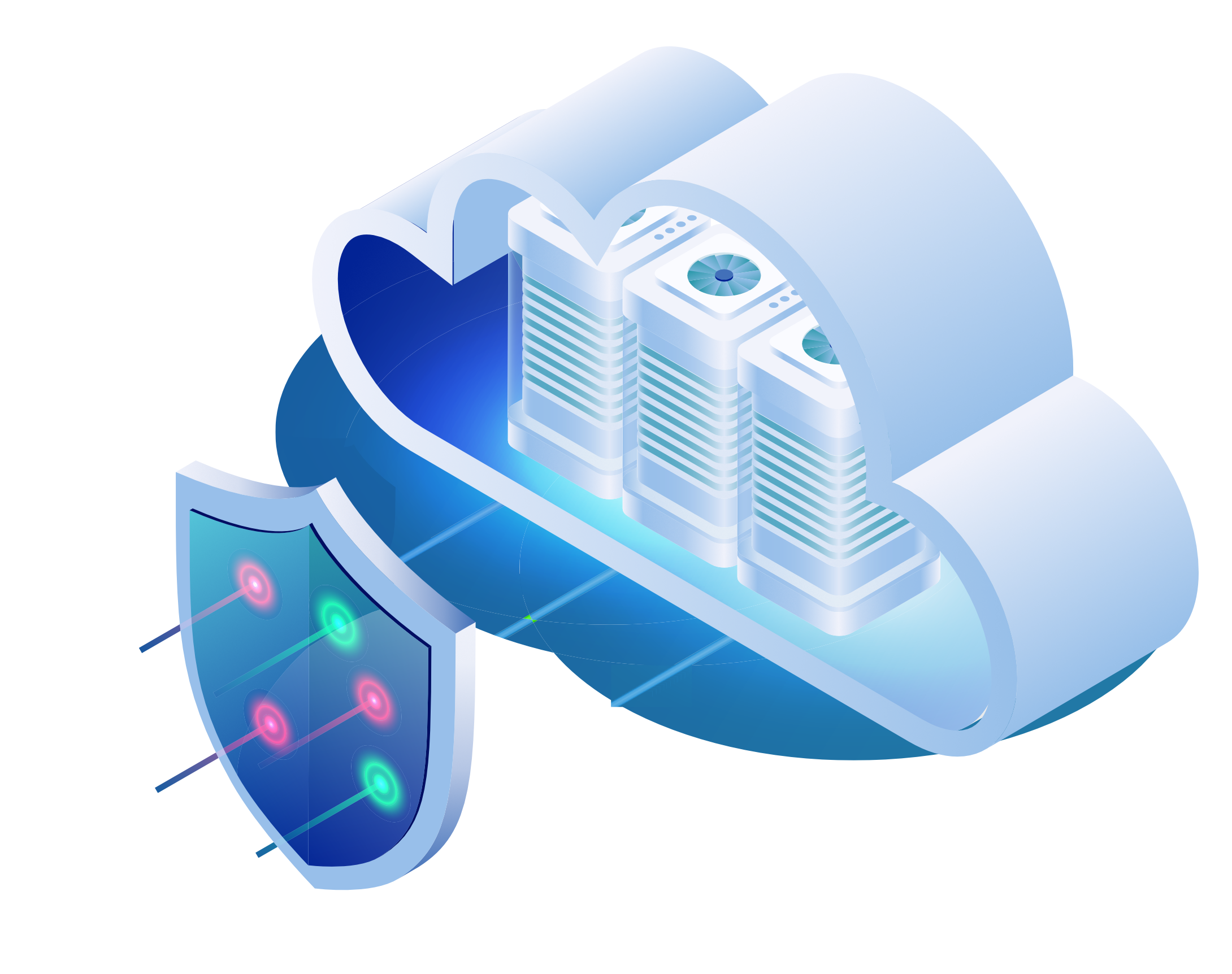
Modern Web Security for a Constantly Evolving Threat Landscape
As organisations adopt SaaS platforms, cloud services and hybrid working models, the web browser has become the primary gateway to corporate systems and data. Traditional perimeter security controls can no longer provide the visibility and protection required to secure modern web and cloud environments.
Apstorm delivers modern Web Security solutions that combine Secure Web Gateway (SWG), Cloud Access Security Broker (CASB) and Browser Isolation capabilities. This layered approach protects users from web-based threats, provides visibility into SaaS usage and prevents sensitive data from being exposed through cloud applications.
The Challenges of Securing a Borderless Web
Today’s workforce relies heavily on browsers and cloud platforms to access business applications and collaborate with colleagues. Employees routinely access SaaS platforms, download files from the internet and share data through web-based tools.
While this enables productivity and flexibility, it also introduces new security risks that traditional network security tools were not designed to address.
Security teams often face challenges such as:
Limited visibility into SaaS application usage
Shadow IT and unsanctioned cloud services
Increasing phishing attacks and malicious websites
Web-borne malware delivered through downloads or browser exploits
Sensitive data being shared through cloud collaboration platforms
Difficulty enforcing consistent security policies across remote workers

Industry research shows 83 percent of organisations identify cloud security as a top priority, reflecting the growing importance of protecting SaaS platforms and web activity.
At the same time, the average global cost of a data breach exceeds $4.4 million, making proactive web and cloud security controls essential for reducing organisational risk.
Phishing and Credential Theft
Phishing websites and fake login portals are designed to trick users into entering credentials for SaaS platforms, email services or internal systems.
Once credentials are compromised, attackers can access cloud services, download data or move laterally within the organisation.
Web-Based Malware Delivery
Cybercriminals frequently use malicious websites or downloads to deliver malware such as ransomware, data stealers or remote access tools.
Without web inspection controls, these threats can reach user devices and compromise corporate system
Shadow IT and Unauthorised SaaS Applications
Employees often adopt cloud tools without the involvement of IT teams. These unsanctioned applications can introduce security and compliance risks if sensitive data is uploaded or shared.
Data Leakage Through Cloud Platforms
Cloud collaboration tools make it easy to share files internally and externally. Without appropriate policies, sensitive information may be exposed through SaaS platforms.

Browser Exploits and Zero-Day Vulnerabilities
Attackers frequently target browser vulnerabilities to execute malicious code on user devices. Because browsers are used daily across organisations, they present a highly attractive attack surface.

Account Takeover (ATO) and Session Hijacking
Attackers increasingly target authenticated sessions to gain access to SaaS applications without needing user credentials. By exploiting weak authentication controls or stealing session data, they can move laterally across cloud platforms and access sensitive information while appearing as legitimate users.
Web Security Threats Facing Organisations Today
As organisations increasingly rely on cloud platforms and web applications, attackers are focusing more heavily on the web layer to gain access to users, credentials and sensitive data. Understanding these threats helps organisations implement effective web security strategies.
Protect Users, Data and Cloud Applications with Web Security
Apstorm delivers a comprehensive Web Security approach that combines:
- Secure Web Gateway
- Cloud Access Security Broker
- Browser Isolation technologies.
Together, these capabilities provide layered protection across internet traffic, cloud applications and user browsing activity. This enables organisations to detect threats earlier, control SaaS usage and prevent malicious content from reaching endpoints.
Secure Web Gateway (SWG)
Secure Web Gateways provide the first layer of defence against web-based threats. SWG technology monitors and controls internet traffic to protect users from malicious websites, phishing attacks and malware downloads.
By inspecting web traffic in real time, SWG solutions enforce security policies that determine which websites users can access and what actions are permitted.
Features & Capabilities
Real-time web traffic inspection
URL filtering and website categorisation
Malware and phishing detection
File download inspection and sandboxing
Threat intelligence integration
Benefits
Reduced exposure to malicious websites and phishing attacks
Safer internet access for employees
Improved visibility into browsing activity
Consistent web usage policies across users and devices
Cloud Access Security Broker (CASB)
CASB technology provides visibility and control over how users interact with cloud applications and SaaS platforms. CASB platforms monitor cloud activity, detect risky behaviour and enforce security policies that protect sensitive data stored within cloud services.
Features & Capabilities
SaaS application discovery
Cloud activity monitoring
Data loss prevention for SaaS platforms
Risk-based access controls
Shadow IT risk analysis
CASB - Benefits
Discovery of sanctioned and unsanctioned cloud applications
Protection of sensitive data in SaaS platforms
Detection of suspicious user behaviour
- Protection against account takeover and session hijacking across SaaS applications
Improved compliance monitoring
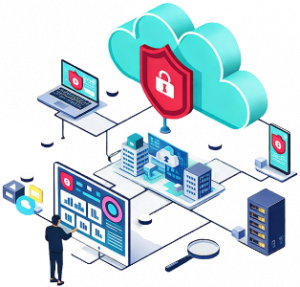
Browser Isolation
Browser Isolation adds an additional layer of protection by separating web browsing activity from user devices.
Instead of executing website code locally, browsing sessions run in a secure remote environment. Only a safe visual representation of the website is delivered to the user.
Features & Capabilities
Remote execution of web sessions
Secure rendering of web content
File download inspection and control
Isolation of high-risk websites
Benefits
Eliminates browser-based malware risk
Protects against zero-day vulnerabilities
Enables safe access to unknown websites
Secures browsing from unmanaged devices
For More Information on Web Security - Get in Touch
How Secure Web Gateway, CASB and Browser Isolation Work Together
Modern web security requires multiple layers of protection. Secure Web Gateway, CASB and Browser Isolation each address different parts of the web and cloud access challenge. Together these technologies provide layered protection across web browsing, SaaS applications and cloud access.
When combined, they create a comprehensive security architecture:
Browser Isolation
Prevents malware and exploit code from reaching user devices by executing web sessions in an isolated environment. Providing:
Safe browsing by isolating web content from user devices
Protection against browser-based malware and zero-day exploits
Secure access to unknown or high-risk websites
Support for remote users and unmanaged devices
Secure Web Gateway
Protects users from malicious websites, phishing attacks and unsafe downloads by inspecting internet traffic. Providing:
Visibility into internet traffic and user browsing activity
Protection against malicious websites, phishing attacks and unsafe downloads
Enforcement of web usage policies across users and devices
Real-time inspection of web traffic to detect and block threats
Cloud Access Security Broker
Provides visibility and control across SaaS platforms, helping organisations monitor cloud usage and protect sensitive data. Providing:
Discovery of sanctioned and unsanctioned SaaS applications
Monitoring of user behaviour across cloud platforms
Protection of sensitive data stored or shared through SaaS services
Security policy enforcement across cloud applications
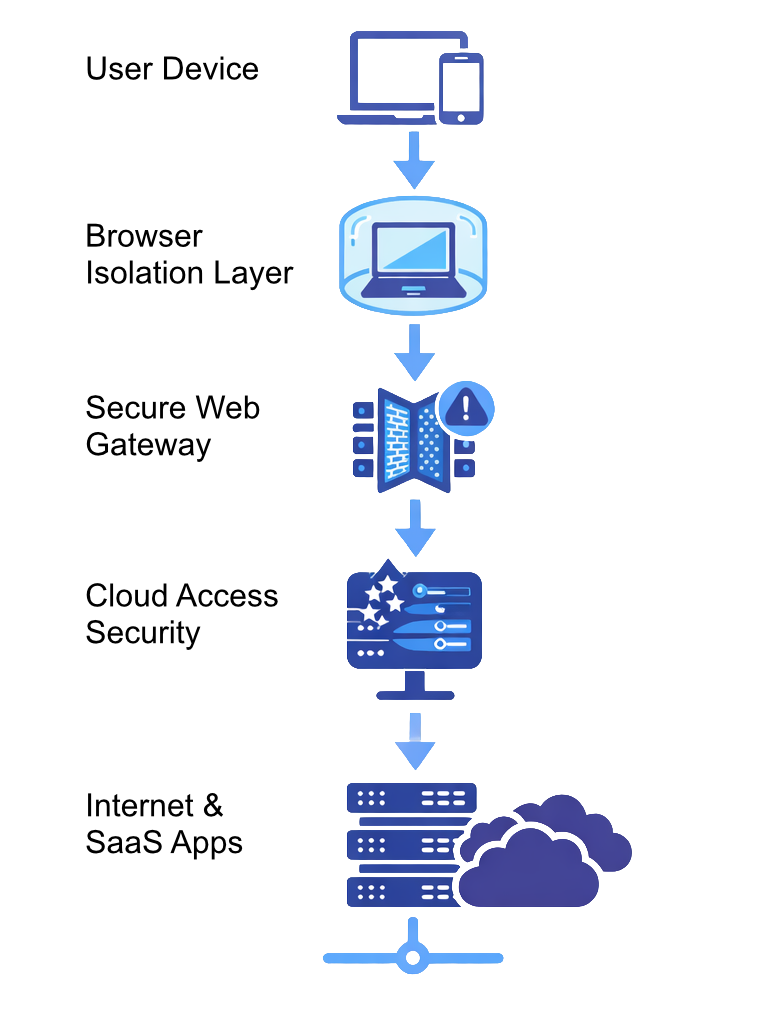
By combining Secure Web Gateway, Cloud Access Security Broker and Browser Isolation technologies, organisations gain comprehensive visibility and protection across web traffic and cloud applications. Secure Web Gateway controls protect users from malicious websites and unsafe downloads, while CASB capabilities provide visibility into SaaS usage and help safeguard sensitive data stored in cloud platforms. Browser Isolation adds an additional layer of protection by preventing malicious web content from reaching user devices. Together, these technologies enable organisations to reduce exposure to phishing and web-based malware, support secure browsing for remote and hybrid workers, improve compliance monitoring and detect suspicious activity more quickly.
Q1: What is the difference between Secure Web Gateway and CASB?
Secure Web Gateway and Cloud Access Security Broker technologies both help secure internet and cloud activity, but they focus on different areas of protection.
Secure Web Gateway focuses on internet traffic:
Protects users from malicious websites, phishing pages and unsafe downloads
Filters and inspects web traffic to enforce internet usage policies
CASB focuses on cloud applications and SaaS platforms:
Provides visibility into how employees access and use SaaS applications
Applies security policies to protect sensitive data stored in cloud services
Together, SWG and CASB provide complementary capabilities. SWG protects users while browsing the internet, while CASB provides visibility and control across cloud applications and SaaS environments.
Q2: Why do organisations need web security for SaaS applications?
As organisations increasingly rely on SaaS platforms, sensitive data is frequently stored and shared through cloud applications. Without proper controls, organisations may lack visibility into how data is accessed or shared.
Web security solutions with CASB capabilities help monitor SaaS activity, enforce data protection policies and detect suspicious behaviour across cloud services.
Q3: How quickly can web security solutions be deployed?
Deployment timelines depend on the organisation’s environment, number of users and integration requirements. Many web security solutions can begin delivering visibility and protection within weeks, with additional policy tuning and optimisation taking place over time.
Apstorm works closely with organisations to ensure a smooth implementation process and minimal disruption to existing operations.
Q4:Will web security solutions impact user productivity?
Modern web security platforms are designed to minimise disruption to users while providing strong protection.
Security policies can be tailored to allow access to business applications and trusted websites while blocking high-risk activity. Technologies such as Browser Isolation allow users to access unknown websites safely without exposing the organisation to threats.
Q5:Can SWG, CASB and Browser Isolation help create a Zero Trust security architecture?
Yes. Secure Web Gateway (SWG), Cloud Access Security Broker (CASB) and Browser Isolation can play an important role in supporting a Zero Trust security model.
Zero Trust is based on the principle that organisations should never automatically trust users, devices or network traffic, even if they are inside the corporate network. Instead, access to applications and data should be continuously verified and monitored.
These technologies help enforce Zero Trust principles in several ways:
Secure Web Gateway (SWG)
Inspects and filters internet traffic to ensure users only access trusted websites and services
Enforces security policies based on user identity, device posture and risk level
Cloud Access Security Broker (CASB)
Provides visibility into how users interact with SaaS applications and cloud services
Applies policies that control access to sensitive data and detect suspicious activity
Browser Isolation
Prevents malicious web content from executing on user devices by running browsing sessions in a secure remote environment
Enables safe access to unknown or untrusted websites without exposing endpoints or networks
When used together, these technologies help organisations verify user activity, monitor access to cloud applications and reduce exposure to web-based threats. This supports the broader Zero Trust approach of continuously validating access and minimising trust across the environment.