Cloud Security

Secure and Manage Cloud Platforms

Advanced Cloud Security enhances security and manages your cloud platforms

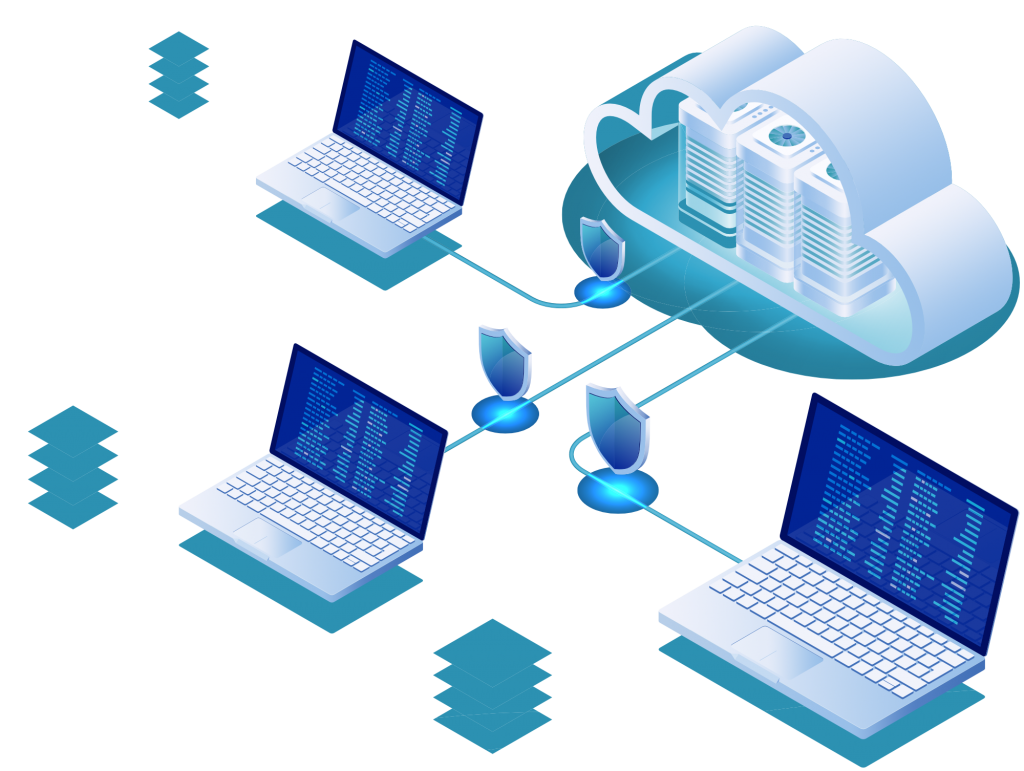
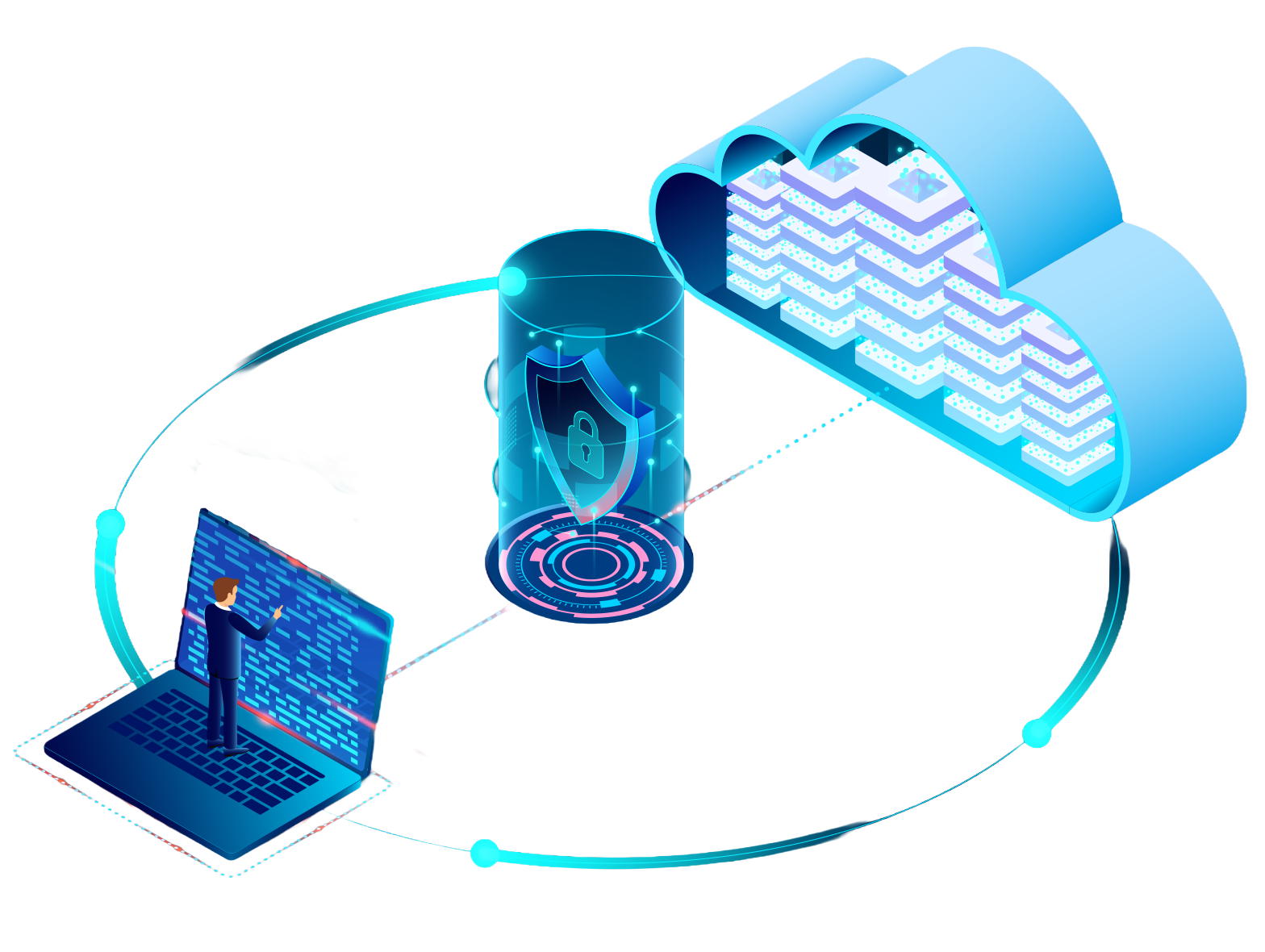
Apstorm helps organisations take control of their cloud environments with an integrated CSPM and CWPP service that delivers visibility, compliance, and protection across Microsoft Azure, Amazon Web Services (AWS), and Google Cloud. Covering both PaaS and IaaS layers, our solution identifies risks, protects workloads, and ensures continuous governance without slowing innovation.

The Problem

Cloud adoption accelerates innovation, but it also multiplies risk. Misconfigured storage in AWS S3, weak IAM policies in Azure, and unpatched workloads in Google Cloud frequently expose sensitive data. PaaS services, serverless functions, and containerised applications bring new security challenges that traditional tools cannot monitor consistently.

IT and security teams face:

  • Fragmented visibility across cloud providers and services

  • Conflicting policies across PaaS and IaaS environments

  • Rising compliance demands from regulators and customers

  • Alert overload, tool duplication, and unclear accountability

  • Resource constraints that slow response to vulnerabilities

Without automation and context, these gaps lead to increased operational risk, audit failures, and lost trust.

The Solution

Apstorm’s combined Cloud Security Posture Management (CSPM) and Cloud Workload Protection (CWPP) service continuously assesses, secures, and simplifies your multi-cloud environment.

Using deep integration with Azure, AWS, and Google Cloud APIs, it analyses configurations, permissions, and workloads across both PaaS and IaaS layers. Every misconfiguration, policy drift, and potential exploit path is flagged, prioritised, and remediated through automated policy enforcement or guided support from our cloud security engineers.

Powered by Fortinet and Sophos technologies, Apstorm’s service merges advanced workload analytics with expert oversight. The result is proactive risk reduction, consistent compliance, and measurable improvements in cloud security matur

Key benefits

  • Reduced Risk Exposure:
    Detects misconfigurations, exposed credentials, and unpatched workloads across Azure, AWS, and Google Cloud in real time. Automated correction policies reduce human error, while continuous monitoring keeps both PaaS and IaaS layers hardened against threats.

  • Operational Efficiency:
    Consolidates multiple cloud security dashboards into one view, cutting down tool sprawl and reducing alert fatigue. Automation handles the baseline security checks, allowing internal teams to focus on strategic remediation and architecture improvement.

  • Regulatory Compliance:
    Aligns your cloud environments to ISO 27001, Cyber Essentials Plus, CIS Benchmarks, and NIST standards. Compliance status is updated continuously, simplifying audits and demonstrating control to regulators and clients without time-consuming manual evidence gathering.
  • Faster Incident Response:
    Correlates workload activity across clouds to detect anomalies such as privilege escalation or unauthorised data access. Integrated playbooks and response automation reduce mean time to detect (MTTD) and mean time to respond (MTTR), keeping incidents contained before escalation.

  • Strategic Visibility:
    Executive-level dashboards provide real-time visibility of compliance posture, risk trends, and workload health. These insights help IT leaders communicate security performance to boards and justify investment in controls and remediation.

  • Peace of Mind:
    Delivered by trusted, independent specialists who understand complex multi-cloud operations. Our experts act as an extension of your internal team, ensuring consistent, reliable support across Azure, AWS, and Google Cloud environments.

Features and Capabilities

Automated Posture Assessment:
Performs deep, continuous scanning across Azure, AWS, and Google Cloud to detect security gaps, misconfigurations, and non-compliant settings across PaaS and IaaS layers. Integrates directly with native APIs, ensuring complete coverage without intrusive agents.
Policy-Driven Compliance:
Built-in frameworks for CIS, ISO 27001, NCSC, PCI DSS, and GDPR map directly to each provider’s controls. Policy templates automatically adapt to Azure Policy, AWS Config, and Google Cloud Security Command Centre, ensuring consistent compliance enforcement.
Threat Detection & Response:
Correlates events from CSPM findings, workload telemetry, and network data to detect active threats. Alerts are enriched with context such as user, asset type, and severity, then routed to existing SIEM/SOAR platforms for rapid triage and automated containment.

Identity & Access Visibility:
Continuously analyses permissions and entitlements across Azure AD, AWS IAM, and Google Cloud IAM. Detects excessive privileges, inactive accounts, and privilege escalation attempts, helping teams enforce least privilege policies across all services.
Workload Protection:
Provides runtime defence for VMs, containers, and serverless functions. Using machine learning and behavioural analytics, the system detects exploits, malware, and lateral movement, isolating affected workloads across any cloud provider to minimise impact.
Flexible Deployment:
Choose between fully managed, co-managed, or advisory delivery. Whether Apstorm manages your cloud posture end-to-end or provides strategic oversight alongside your internal teams, every engagement includes tailored guidance and actionable reporting for ongoing improvement.


Your Best Choice

Discover the Value We Bring to You

We provide solutions tailored to your needs, ensuring quality service and great results.

01

Expert Support

Our team is ready to assist you when needed, offering guidance and expertise.

02

Customer Focused

We listen to your needs and adapt our services to meet your expectations.

03

Quality Assurance

Our quality checks ensure that you receive only the best results, every time.

For More Information Get in Touch

For More Information Get in Touch

Q1: Can Apstorm secure both PaaS and IaaS workloads?

Yes. We monitor and protect workloads, configurations, and services across PaaS and IaaS layers in Azure, AWS, and Google Cloud.

Most clients achieve complete visibility within 2–4 weeks. Full workload protection follows once integrations and baselines are validated.

Yes. It integrates seamlessly with SIEMs, SOAR tools, ticketing systems, and CI/CD pipelines for consistent operations.

ISO 27001, CIS Benchmarks, GDPR, PCI DSS, NIST, NCSC guidance, and custom frameworks.

We combine automated cloud-native tools with expert human analysis. This hybrid model ensures consistent, business-aligned protection across Azure, AWS, and Google Cloud environments.

FAQ's

Q1: Can Apstorm secure both PaaS and IaaS workloads?

Yes. We monitor and protect workloads, configurations, and services across PaaS and IaaS layers in Azure, AWS, and Google Cloud.

Most clients achieve complete visibility within 2–4 weeks. Full workload protection follows once integrations and baselines are validated.

Yes. It integrates seamlessly with SIEMs, SOAR tools, ticketing systems, and CI/CD pipelines for consistent operations.

ISO 27001, CIS Benchmarks, GDPR, PCI DSS, NIST, NCSC guidance, and custom frameworks.

We combine automated cloud-native tools with expert human analysis. This hybrid model ensures consistent, business-aligned protection across Azure, AWS, and Google Cloud environments.

As cloud computing (PaaS & IaaS) has escalated over the last five years the need to secure cloud platforms like, AWS (Amazon Web Services) and MS Azure has increased. Cloud providers do have security tools built into their systems and they should be configured correctly to help ensure the security of the system. However, they can be tricky to set up correctly, vary from one PaaS provider to another and may only offer a basic level of native security.

This is where Cloud Firewalls come in, they overlay the cloud service with enterprise class security that offers the same firewall protection as the organisations main internet gateway as from a dedicated security vendor. This allows the organisation to feel secure that the cloud service is fully protected.

The cloud firewall works with and upscales the PaaS providers existing security and adds additional protection. Functions like enterprise class Intrusion Protection (IPS), alerting, monitoring and reporting on security events in the cloud environment, this can all be done in a single security console for administration along with the corporate firewalls, this ensures the security is standardised to “Best in Class” across the whole of the organisation. The Cyber Security team also have one solution to learn, monitor and administer.

Cloud Security Solutions Provide:
  • Enhanced Security – linking into the cloud providers inbuilt tools and where appropriate, enhance it with higher grade technology, to always give the strongest security.  
  • Automation – many of the in-built cloud providers tools need manual set up and updates. Deploying a dedicated cloud security solution provides easy configuration of the security settings, both native and enhanced. It also automates the security so that the right fixes are provided at the right time  
  • Visibility – knowing what is happening inside your cloud environment and making sense of log data is key to having a secure environment. A dedicated cloud solution can provide in built reports and real time events for security and cloud teams to respond to.  

PaaS – Platform as a Service

Platform as a Service has exploded over the last five years. It is a way of providing server power, with an installed operating system, analytics and storage in the cloud. Key vendors include Amazon Web Services (AWS), Microsoft Azure and Google Cloud. PaaS is sometimes called cloud computing.

PaaS allows organisations to consume the vendors platform (Servers, operating systems and storage) on demand without having to worry about physical space or power. They can also consume the service temporarily to do testing or run service for a short period. Another benefit is that the vendor keeps everything up to date on the latest operating system version and adds reliance into the system, so the service is always available.

Some of the drawbacks are that cloud computing can be more expensive than running software licenses on premises, especially if there are a lot of users consuming the service. Vendor licensing models can include, number of services being used, connections by users, data transfer amount, analytics and storage. An active internet connection is also needed.

From a security perspective, like SaaS the user can bypass the organisations security from home or remote locations if it is not directed through a VPN, Web Security or CASB. Also the Cloud Provider will not guarantee the security of the data residing on their system. They do offer some tools to secure it, but the organisation must ensure these are configured correctly and it is a good idea to install a Cloud Firewall to further harden the installation.

GDPR is also a consideration if the cloud service is hosted outside of the EU. Although most providers offer an option that the service is run out of an EU based datacentre.

IaaS – Infrastructure as a Service

IaaS is the same as PaaS but only the server space is offered. The organisation must set up the operating system and do all the updates. 

Many hosting companies offer IaaS solutions, and the benefits are like PaaS.

The security considerations are like PaaS but patching the operating system for vulnerabilities is also a factor.  As well as running a regular backup.

Apstorm works with a number of leading vendors to provide Cloud Security, contact us for a free of charge Cloud Security Audit. 

Check Point CloudGuard provides cloud-native security for all your assets and workloads, across multi-clouds, allowing you to automate security everywhere, with unified threat prevention and posture management. The only solution that provides context to secure your cloud with confidence.

  • Serverless Security
  • Container Security
  • Cloud Compliance & Governance
  • Private Cloud Network Security
  • AWS Security
  • Azure Security
  • GCP Security

Fortinet adaptive cloud security solutions and products complement the power and scalability of cloud providers by breaking down the barriers that complicate security visibility and management across an organization’s entire infrastructure. At the same time, Fortinet streamlines operations, policy management, and visibility for improved security lifecycle management with full automation capabilities. And with native integration of security capabilities to each cloud platform, Fortinet products enable broad protection of applications and support for the broadest set of cloud use cases.

  • FortiGate: Industry leading next-generation firewall runs in the cloud or on-premise
  • FortiWeb: Fortinet’s web-application firewall protects web applications and helps with patching and regulatory compliance.


Microsoft Azure Defender, integrated with Azure Security Center, for Azure and hybrid cloud workload protection and security. With Extended Detection and Response (XDR) capabilities, stand up against threats such as remote desktop protocol (RDP) brute-force attacks, and SQL injections. Streamline security with AI and automation.

For more information on protecting Cloud Platforms